4 min read
Keyword research for small business, step by step
How to find low-competition keywords your customers search for, and turn them into pages that grow your business, without an agency.

Contents
Keyword research for a small business means finding the searches your customers already type, choosing the ones big competitors don't own, and building one useful page for each. Start from your customers' questions, then use Trendmule to see which related searches are rising in your market, favour specific and rising keywords over big ones, and map each to a page. A shop can do it in an afternoon without an agency.
This guide is the do-it-yourself version, with a checklist at the end.
Why does keyword research matter for a small business?
Keyword research shows you what customers want in their own words, before you spend money on pages, products or ads. A page built around a real search can bring visitors every month for years; a page built around a guess usually brings none.
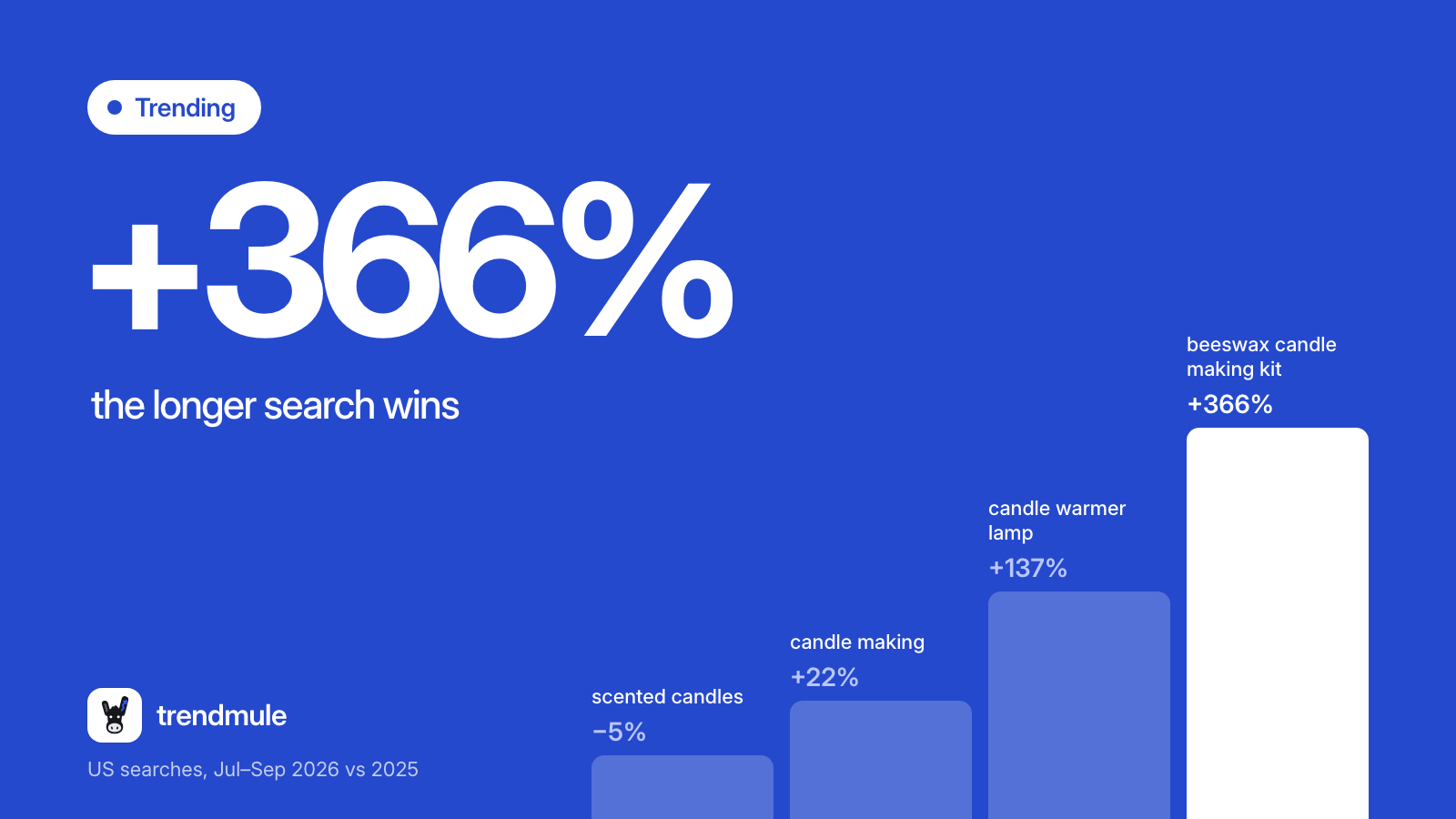
The bigger win for a small business is focus, and it starts with finding a niche with rising searches. You can't compete with national brands on "candles", but you can be the most useful answer for "soy candles for sensitive skin", and the people searching that know exactly what they want.
How do you do keyword research for a small business, step by step?
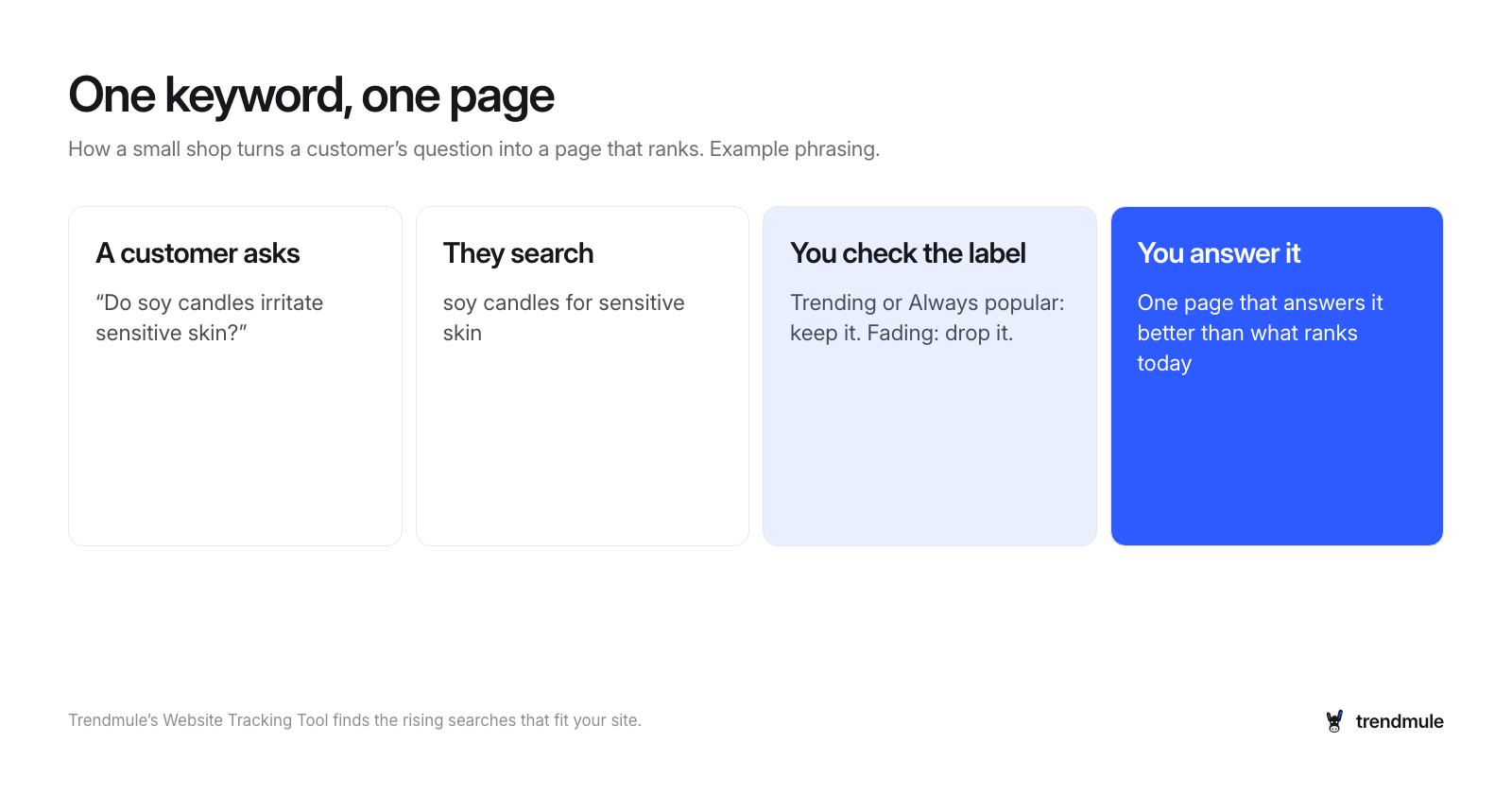
- List your customers' questions. What do they ask in your shop, emails and reviews? Write them the way customers say them.
- Expand the list with search autocomplete and the "People also ask" questions for each phrase.
- Find what's rising. Add your website to Trendmule's Website Tracking Tool (beta, Pro), or pick your topic and country, to get the searches gaining speed that fit your business.
- Check direction. Keep keywords labelled Trending or Always popular; drop those labelled Fading. How to read search trends explains each label.
- Check competition on page one. Forums and thin pages ranking means room for you; national brands on every result means look narrower.
- Pick one keyword per page. One main keyword, a few close variations, and one page that answers it better than what ranks today.
How do you find low-competition keywords?
Low-competition keywords are specific, longer searches that big sites don't target. They're easier to rank for because fewer strong pages answer them.
- Add a detail: a material, a size, a use or a place. "Candles" becomes "soy candles for sensitive skin".
- Use questions: "how to", "what is", "which is right for". Question searches often have thin answers.
- Look for rising searches: a search that's new has fewer pages answering it, so you can be first. Our guide on how to find trending keywords covers it step by step.
A big search number looks like a big opportunity, but the pages ranking for it got there years ago. That's why a smaller search that's still climbing is often the better bet for a small site.
How do you turn keywords into growth?
Each keyword you keep becomes a page or a change to one:
- Product and service pages for buying searches ("soy candles for sensitive skin").
- Guides and blog posts for questions ("how long should a soy candle burn").
- Seasonal pages published four to six weeks before a yearly climb, for searches labelled Always popular.
Put the keyword in the page title and the first lines, answer the question directly, and link related pages to each other. Then check Trendmule weekly: new rising searches arrive while competitors are still working from last year's list. See what Trendmule includes.
What's on a keyword research checklist?
- Customer questions written in their words
- Each phrase expanded with autocomplete and "People also ask"
- Rising searches for your site or topic, from Trendmule
- Direction checked: Trending, Sticking around, Always popular or Fading
- Page one read for each keyword: is there room?
- One main keyword per page, mapped in a simple sheet
- Rankings and rising searches reviewed regularly
What are the limits of doing keyword research yourself?
- Rankings take time. A new page can take months to rank, so start with the keywords closest to sales.
- Keywords change. Searches rise and fade, so a list from last year will miss what's new.
- Research isn't writing. The list only pays off when each keyword gets a page that answers it well.
The second point is where most small businesses fall behind: the research gets done once and never again. A weekly look at rising searches catches them while they're still easy to win.
Questions people ask
How do I find keywords for my small business?
Write down the questions customers ask you, expand them with autocomplete and "People also ask", then use Trendmule to see which related searches are rising in your market.
What are low-competition keywords?
Specific, longer searches that big sites don't target, often questions or phrases with a detail like a material, size or place. They're easier for small sites to rank for.
Can I do keyword research without an agency?
Yes. Customer questions, autocomplete, "People also ask" and a weekly look at rising searches in Trendmule cover what most small businesses need.
How often should a small business do keyword research?
Do a full pass once, then check rising searches weekly or monthly, and more often if you sell seasonal or trend-led products.