4 min read
How to find a niche with rising searches
A step-by-step way to find a niche with growing demand, check it isn't a fad, and decide if it's worth building on.

Contents
To find a niche, look for a narrow search that's still rising inside a broad topic you understand. In Trendmule, pick your country and a broad topic such as home fitness or pet food, and you get the searches gaining speed there, each labelled Trending, Sticking around, Always popular or Fading. Niches worth building on are small, specific and labelled Trending.
This guide walks through the steps, the checks that weed out fads, and what to confirm before you commit money.
What makes a good niche?
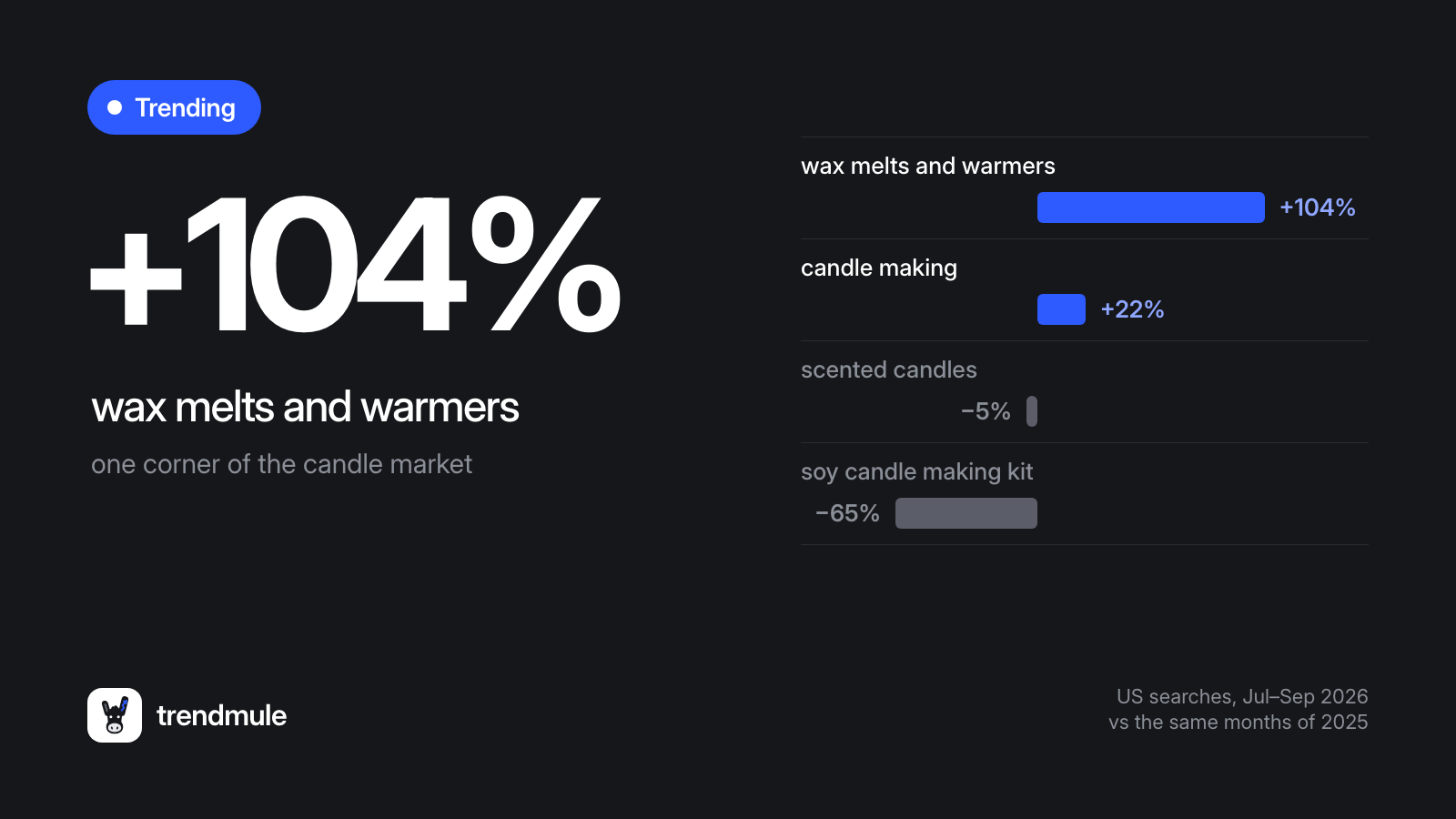
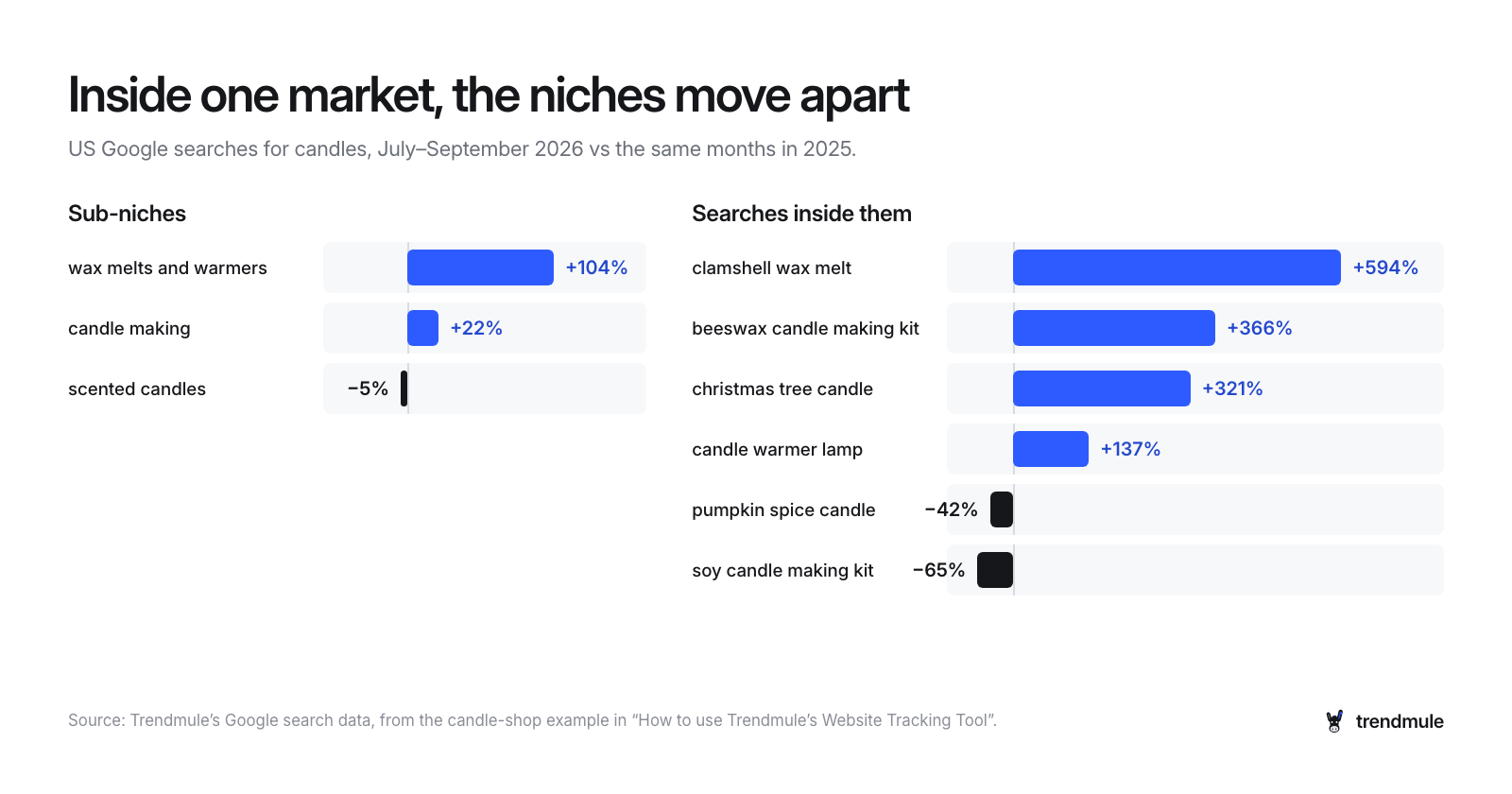
A good niche is a specific group of people searching for something that's growing, which bigger players don't serve well yet. "Candles" is a market; "soy candles for sensitive skin" is a niche. The narrower search has fewer people, but they know exactly what they want.
Direction matters more than size. A niche that's small and rising lets you be early; a niche that's big and flat is already crowded. A big search number looks like a big opportunity, but most of that demand is already served, which is why a smaller search that's still climbing is often the better place to start.
How do you find a niche with Trendmule, step by step?
- Pick a broad topic you understand. Your skills, your hobby or your current customers: home fitness, pet food, candles.
- Choose the country where you'd sell. Trendmule lists the searches gaining speed there, ranked by momentum.
- Shortlist searches labelled Trending that sound like a product, a problem or a group of people.
- Open each one's history. Look for a climb that holds across months, not one spike. Pro keeps up to two years.
- Check the regions. Demand that comes from one region is either where you start selling or a sign the niche hasn't spread yet.
- Set a niche alert so you hear when your shortlist moves.
If you already run a shop or a site, the Website Tracking Tool (beta, Pro) does steps 1 to 3 from your website: it finds the rising searches that fit what you already sell.
How do you tell a rising niche from a fad?
A rising niche climbs for months and holds; a fad climbs in weeks and falls almost as fast. Trendmule's labels sum up the shape: Trending for a climb that's still going, Sticking around for one that's settled, Always popular for a yearly wave and Fading for a niche past its best.
Fads can look like niches at their peak. In Trendmule's Google search data checked on 2 October 2026, US searches for Labubu were down 94% on a year earlier, Dubai chocolate 74% and wall pilates 67%. Anyone who built a business around them at the top bought in at the peak. Our guide on how to read search trends explains the four shapes in detail.
What should you check before you commit to a niche?
Rising searches tell you demand is there. Three more checks tell you whether you can win it:
- Who ranks today. Search the niche yourself. If page one is forums and thin pages, there's room; if it's big brands, look narrower. Keyword research for small business shows how to read page one.
- Whether people pay. Ads and shopping results on the page mean someone makes money from these searches.
- Whether you can serve it. A niche you can't make a better product or page for is someone else's opportunity.
Then test small before you build big. Our guide on how to validate a business idea covers cheap ways to check people will pay. If your niche is an app, App ideas in Trendmule ranks rising searches that look like apps and checks each one against the App Store.
What are the limits of finding a niche with search data?
- Search shows demand, not profit. A rising search can belong to a low-margin product.
- Some buyers don't search. B2B buyers and brand-new categories often don't type what they need yet.
- Rising means early, and early means small. You're betting on direction, so expect modest numbers at first.
Rising searches are the fastest first filter, not the whole decision. See what Trendmule includes if you want that filter running every week.
Questions people ask
How do I find a niche for my business?
Pick a broad topic you know and your country in Trendmule, then shortlist the narrow searches labelled Trending. Check each one's history and who ranks for it before you commit.
How do I know if a niche is profitable?
Look for searches that are still rising, ads or shopping results on the results page, and room on page one. Then test with a small offer before you build anything.
How do I know if a niche is just a fad?
Check its history across months. A fad spikes and falls within weeks; a lasting niche climbs and holds. Labubu fell 94% in a year in Trendmule's US data, 2 October 2026.
What's the difference between a niche and a market?
A market is a broad category such as candles. A niche is a specific group within it, such as soy candles for sensitive skin, with needs the broad market doesn't serve well.